Sleep Deprivation Explained: Types, Causes, Symptoms, and Treatment
By Donu••Lifestyle• 107 views
Advertisement
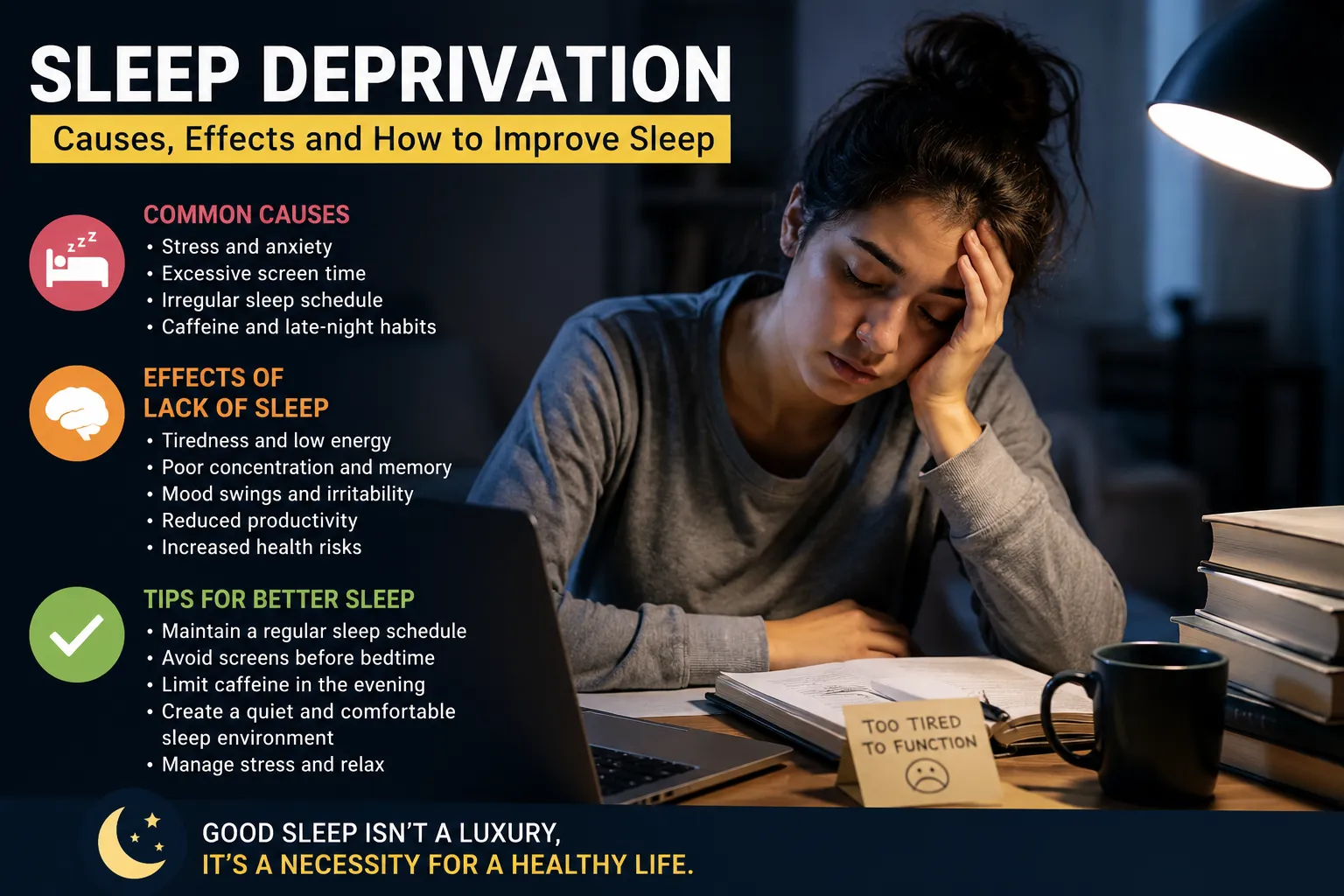
Sleep Deprivation: Causes, Types, Symptoms, Effects and How to Sleep Better
Sleep deprivation is becoming increasingly common in today’s busy lifestyle. Work, studies, social media, entertainment, stress, shift work, and personal responsibilities can all reduce the amount or quality of sleep a person gets.
Missing sleep occasionally may make you feel tired the next day, but repeated or severe sleep loss can affect the brain, mood, metabolism, cardiovascular health, and everyday performance. Sleep deficiency can also interfere with learning, concentration, reaction time, work, school, and safety.
In this article, we will explore sleep deprivation, including total sleep deprivation, partial sleep deprivation, and chronic sleep restriction, along with their causes, symptoms, health effects, and practical sleep interventions.
What Is Sleep Deprivation?
Sleep deprivation means not getting enough sleep to meet the body's needs. Sleep deficiency is a broader term that can also include sleeping at the wrong time, getting poor-quality sleep, or having a sleep disorder that prevents adequate rest.
Sleep is an active biological process rather than simply a period when the body switches off. During sleep, the brain and body carry out important processes that support learning, memory, emotional regulation, immune function, and physical recovery.
When a person repeatedly gets less sleep than they need, the resulting sleep loss can affect both short-term functioning and long-term health.
Types of Sleep Deprivation
Sleep deprivation can occur in different forms.
1. Total Sleep Deprivation
Total sleep deprivation occurs when a person gets no sleep for an extended period. Staying awake all night to study, work, travel, or complete an urgent task is a common example.
Even a single episode of total sleep deprivation can cause significant daytime sleepiness, reduced alertness, slower reaction time, and cognitive impairment.
2. Partial Sleep Deprivation
Partial sleep deprivation occurs when a person sleeps for some of the night but gets less sleep than their body requires.
For example, someone who repeatedly sleeps for only a few hours because of work, studying, entertainment, or late-night phone use may experience partial sleep deprivation.
3. Chronic Sleep Restriction
Chronic sleep restriction refers to repeatedly getting less sleep than needed over an extended period. Unlike total sleep deprivation, a person with chronic sleep restriction may sleep every night but still accumulate a significant sleep deficit.
Long-term insufficient sleep has been associated with problems involving cardiovascular health, metabolism, mood, and cognitive functioning.
Common Causes of Sleep Deprivation
There are many reasons why people may not get enough sleep.
1. Stress and Anxiety
Stress is a common contributor to poor sleep. Concerns about work, school, relationships, finances, or personal responsibilities can make it difficult to relax at bedtime.
2. Excessive Screen Time
Using smartphones, computers, televisions, and other electronic devices late at night can delay bedtime and expose people to bright artificial light. Social media, videos, games, and notifications can also keep the brain engaged when it should be preparing for sleep.
3. Busy Lifestyle
Work, studies, household responsibilities, commuting, and social activities can reduce the amount of time available for sleep. Some people regularly stay awake late to complete tasks and then wake up early the next morning.
4. Irregular Sleep Schedule
Going to bed and waking up at significantly different times can interfere with the body's internal clock. This can contribute to circadian rhythm disruption, particularly when sleep schedules frequently change.
Maintaining a consistent sleep and wake schedule can help support a healthy sleep-wake rhythm.
5. Caffeine
Coffee, tea, energy drinks, chocolate, and other caffeinated products can interfere with sleep, particularly when consumed later in the day. Caffeine's effects can last for several hours.
6. Poor Sleeping Environment
Noise, bright lights, an uncomfortable mattress, excessive heat, or an unsuitable room temperature can make it harder to sleep comfortably.
7. Shift Work and Changing Schedules
Night shifts and frequently changing work schedules can make it difficult to sleep at the body's preferred biological time. Shift workers may therefore experience both sleep loss and circadian rhythm disruption.
8. Sleep and Health Conditions
Sleep deprivation can sometimes result from an underlying sleep disorder or another health problem. Persistent difficulty falling asleep, staying asleep, or feeling rested may require professional evaluation.
Symptoms of Sleep Deprivation
A lack of sleep can cause noticeable changes during the day. Common symptoms include:
- Feeling tired or sleepy during the day
- Difficulty concentrating
- Reduced alertness
- Memory problems
- Cognitive impairment
- Slower reaction time
- Difficulty making decisions
- Irritability or mood changes
- Low energy
- Reduced productivity
- Trouble staying focused
- Increased mistakes
- Feeling unrefreshed after waking
Sleep deficiency can interfere with learning, focusing, reacting, work, school, driving, and social functioning.
Sleep Deprivation and the Brain
Sleep plays an important role in brain function. Adequate sleep supports learning, attention, emotional regulation, and memory consolidation.
When sleep is restricted, people may have greater difficulty concentrating, remembering information, solving problems, and responding quickly. These effects can become especially noticeable after severe or repeated sleep loss.
Research into the biological effects of sleep loss also examines processes such as inflammation and neuroinflammation, which may help explain some of the effects that prolonged sleep disruption can have on the brain and nervous system.
Sleep Deprivation and Mood
Poor sleep can affect emotional well-being. People experiencing sleep deprivation may become more irritable, stressed, impatient, or emotionally sensitive.
Long-term sleep problems have also been associated with depression, anxiety, and other mental-health difficulties.
Sleep and mental health can influence each other. Stress and emotional difficulties can interfere with sleep, while persistent sleep problems can make emotional regulation more difficult.
Effects of Sleep Deprivation on Physical Health
Sleep deprivation does more than cause daytime tiredness. Repeated insufficient sleep has been associated with several long-term health concerns.
Metabolic Health
Insufficient sleep can affect processes involved in appetite regulation, glucose metabolism, and energy balance. Research has associated inadequate sleep with obesity, insulin resistance, and type 2 diabetes.
These concerns are sometimes described collectively as metabolic disorders or cardiometabolic problems.
Cardiovascular Health
Long-term insufficient sleep has been associated with increased cardiovascular risk, including conditions such as high blood pressure, stroke, and coronary heart disease.
Sleep should therefore be considered an important part of a healthy lifestyle rather than something that can regularly be sacrificed for work or entertainment.
Immune and Inflammatory Processes
Sleep interacts with the immune system and inflammatory processes. Researchers are investigating how persistent sleep loss may influence inflammation, including neuroinflammation, and how these biological changes may contribute to health problems.
Sleep Deprivation and Daily Performance
When you are sleep deprived, even simple tasks can become more difficult.
Sleep loss can reduce:
- Attention
- Reaction time
- Concentration
- Decision-making
- Memory
- Productivity
- Learning ability
- Coordination
This can become particularly dangerous when someone is driving, operating machinery, or performing other activities that require sustained attention.
Sleep Deprivation Among Students
Students often sacrifice sleep because of examinations, assignments, homework, late-night studying, social media, and entertainment.
However, studying longer does not necessarily mean learning more effectively. Sleep supports learning and memory consolidation, so regularly sacrificing sleep may work against academic performance.
Instead of relying on all-night study sessions, students can benefit from planning their study time earlier, taking appropriate breaks, maintaining a consistent sleep schedule, and leaving enough time for sleep.
How to Prevent Sleep Deprivation
Improving sleep does not always require major lifestyle changes. Consistent sleep hygiene and other appropriate sleep interventions can help support healthier sleep.
Follow a Regular Sleep Schedule
Try to go to bed and wake up at approximately the same time every day. Keeping your schedule reasonably consistent can support your body's circadian rhythm.
Reduce Screen Time Before Bed
Use the period before bedtime for quiet activities instead of spending long periods on your phone, computer, or television. Bright artificial light and stimulating content can make it harder to wind down.
Create a Relaxing Bedtime Routine
Reading, listening to calm music, taking a warm bath, or practicing relaxation techniques may help you transition into bedtime.
Limit Caffeine Later in the Day
If caffeine affects your sleep, avoid coffee, tea, energy drinks, and other caffeinated products close to bedtime.
Make Your Bedroom Comfortable
A bedroom that is quiet, cool, dark, and comfortable can make it easier to sleep.
Get Regular Physical Activity
Regular daytime physical activity can support healthy sleep. However, some people may find intense exercise close to bedtime disruptive.
Manage Stress
Creating time to relax, organizing daily responsibilities, and practicing appropriate stress-management techniques may make it easier to prepare for sleep.
What Is Recovery Sleep?
Recovery sleep refers to additional or restorative sleep obtained after a period of insufficient sleep.
Getting adequate sleep after sleep loss is important, but relying on occasional long sleep-ins does not necessarily make up for a pattern of chronic sleep restriction. The better approach is to prevent repeated sleep loss by making sufficient sleep part of your regular schedule.
Cognitive Behavioral Therapy for Sleep Problems
For people with persistent insomnia, lifestyle changes alone may not be enough.
Cognitive behavioral therapy for insomnia (CBT-I) is a structured treatment that addresses thoughts and behaviors that can contribute to insomnia. It may include cognitive techniques, relaxation strategies, sleep education, stimulus control, and other behavioral approaches.
Clinical guidelines strongly recommend multicomponent CBT-I for adults with chronic insomnia disorder. Sleep hygiene can be useful as part of a broader approach, but it is not considered an adequate stand-alone treatment for chronic insomnia.
Sleep Interventions and Treatment
The appropriate sleep interventions depend on the cause of the sleep problem.
For occasional sleep loss, improving sleep habits, managing schedules, reducing late-day caffeine, and creating a comfortable sleep environment may help.
For persistent insomnia or suspected sleep disorders, a healthcare professional can assess the underlying cause and recommend appropriate treatment. CBT-I is one evidence-based treatment for chronic insomnia.
When Should You Seek Professional Help?
Occasional poor sleep is common. However, consider speaking with a healthcare professional if:
- You regularly have difficulty falling or staying asleep.
- You frequently wake up feeling unrefreshed.
- Daytime sleepiness interferes with work, school, or daily activities.
- Sleep problems continue despite improving your sleep habits.
- You regularly fall asleep unintentionally during the day.
- You suspect you may have a sleep disorder.
Persistent sleep problems can sometimes be connected to an underlying medical or sleep condition. Professional evaluation can help identify the cause and determine appropriate treatment.
Conclusion
Sleep deprivation is more than simply feeling tired after a late night. It can occur as total sleep deprivation, partial sleep deprivation, or chronic sleep restriction, and repeated sleep loss can affect concentration, memory consolidation, mood, metabolism, cardiovascular health, and daily performance.
Protecting your sleep starts with consistent habits. Maintain a regular sleep schedule, reduce stimulating screen use before bed, limit late-day caffeine, manage stress, stay physically active, and create a comfortable sleeping environment.
For persistent insomnia, evidence-based sleep interventions such as cognitive behavioral therapy for insomnia (CBT-I) may be appropriate.
Sleep should not be treated as time wasted or something that can always be sacrificed. Making enough time for quality sleep is an important part of protecting your health, focus, performance, and overall well-being.
Make sleep a priority today for a healthier tomorrow.
Frequently Asked Questions About Sleep Deprivation
What is sleep deprivation?
Sleep deprivation means not getting enough sleep to meet the body's needs. It can affect energy, concentration, memory, mood, reaction time, and overall health.
What are the different types of sleep deprivation?
The main forms discussed include total sleep deprivation, when a person gets no sleep for an extended period; partial sleep deprivation, when a person gets some sleep but not enough; and chronic sleep restriction, when insufficient sleep continues repeatedly over time.
What are the common symptoms of sleep deprivation?
Common symptoms include daytime sleepiness, tiredness, difficulty concentrating, memory problems, reduced alertness, slower reactions, mood changes, and reduced productivity.
What causes sleep deprivation?
Common causes include stress, excessive screen time, an irregular sleep schedule, a busy lifestyle, caffeine, shift work, an uncomfortable sleeping environment, and certain medical or sleep conditions.
What is circadian rhythm disruption?
Circadian rhythm disruption occurs when a person's sleep-wake schedule becomes misaligned with the body's internal biological clock. Irregular schedules, night shifts, jet lag, and frequently changing sleep times can contribute to it.
Can sleep deprivation affect memory?
Yes. Sleep supports learning and memory consolidation. Sleep deprivation can make it more difficult to concentrate, learn, remember information, and perform cognitive tasks.
Can sleep deprivation affect physical health?
Yes. Persistent insufficient sleep has been associated with metabolic problems and increased cardiovascular risk, including conditions such as obesity, diabetes, hypertension, and cardiovascular disease.
How can I improve my sleep?
Start with good sleep hygiene: maintain a consistent sleep schedule, reduce bright screens before bed, limit caffeine later in the day, stay physically active, manage stress, and keep your bedroom quiet, cool, dark, and comfortable.
What is recovery sleep?
Recovery sleep is sleep obtained after a period of insufficient sleep. It can help restore alertness and functioning, but consistently getting enough sleep is preferable to repeatedly accumulating sleep loss.
Is CBT-I useful for sleep problems?
Cognitive behavioral therapy for insomnia (CBT-I) is a well-established treatment for chronic insomnia. Clinical guidelines strongly recommend multicomponent CBT-I for adults with chronic insomnia disorder.
When should I seek help for sleep problems?
If sleep problems happen regularly, persist despite healthy sleep habits, or interfere with work, school, driving, relationships, or daily activities, consider speaking with a healthcare professional.