10 Benefits of a Healthy Lifestyle That Actually Show Up in Everyday Life
By Ashirbad ••Lifestyle• 114 views
Advertisement
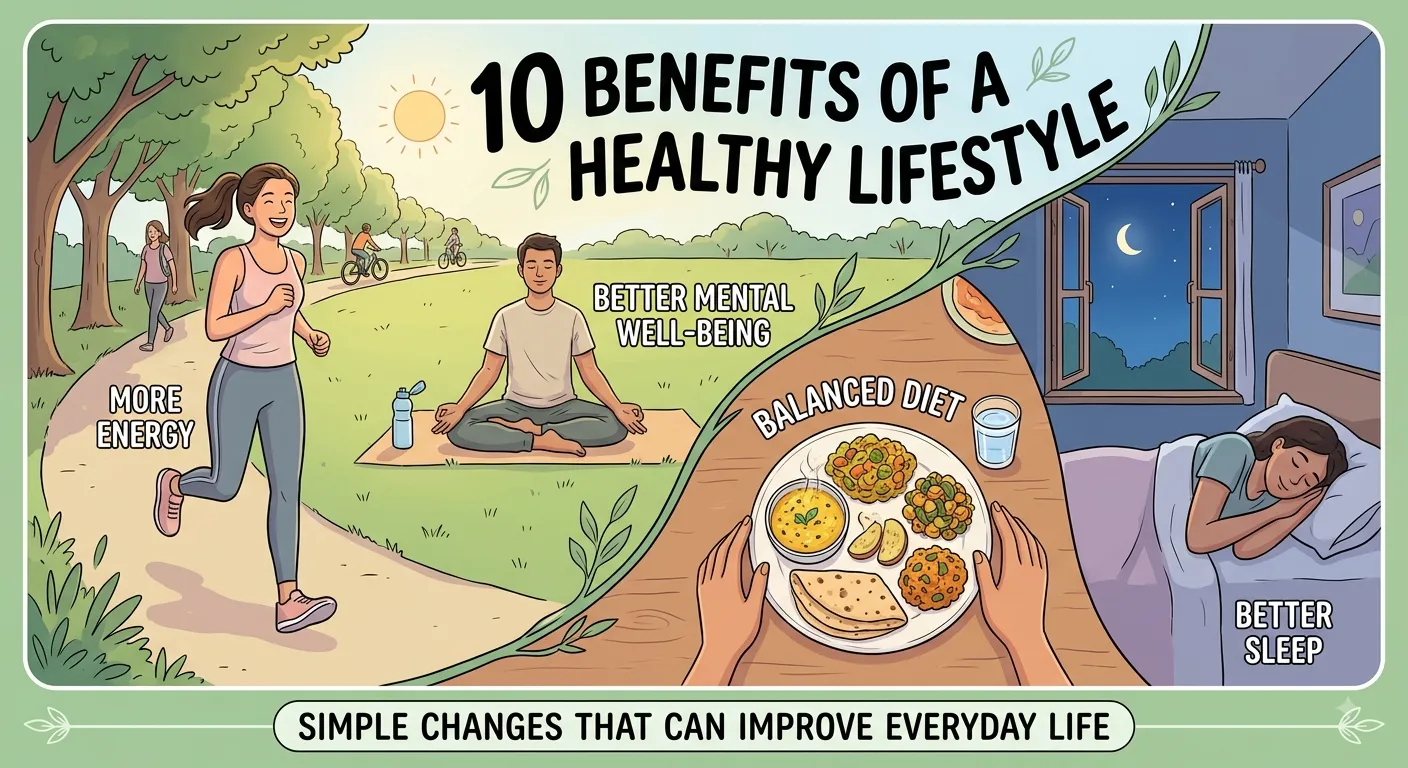
10 Benefits of a Healthy Lifestyle That Actually Show Up in Everyday Life
A healthy lifestyle isn't about a perfect diet, hours in the gym, or giving up everything you enjoy. It's really just about which habits you repeat most days.
Eating a varied diet, staying active, sleeping enough, managing stress, and staying connected to people you care about — these are the real building blocks. The World Health Organization treats healthy eating and regular physical activity as core parts of overall well-being, not optional extras.
This article covers the 10 benefits of a healthy lifestyle, what it means for students specifically, a few honest downsides worth knowing, and simple ways to build the habit without overhauling your whole routine overnight.
What Counts as a Healthy Lifestyle?
A healthy lifestyle is just a set of everyday habits that support your body and mind together. It usually includes eating a balanced diet, moving regularly, sleeping enough, drinking enough water, managing stress, staying social, avoiding tobacco, and taking breaks from screens.
None of that requires money. Walking, home-cooked meals, a consistent bedtime, and time outdoors all count.
10 Benefits of a Healthy Lifestyle
1. Better physical health. Regular movement keeps your body fit, and a balanced diet gives it the fuel and nutrients it needs. Physical activity is also linked to a lower risk of several chronic diseases — and none of that requires a gym membership. Walking, cycling, dancing, or even housework all count as physical activity.
2. More steady energy. Poor sleep, an unbalanced diet, and too much sitting all drain your energy. Movement, better food, and proper rest support it instead. This doesn't mean every day feels energetic — it means your baseline improves over time.
3. Better mental well-being. Physical activity does more than shape your body. WHO notes that regular activity can ease symptoms of depression and anxiety and support overall mental well-being. A walk, time outside, or a conversation with a friend can genuinely shift your mood. This isn't a replacement for professional mental health care when it's needed, but it's a meaningful part of the bigger picture.
4. Better sleep. A day with almost no movement and a lot of late-night screen time tends to wreck your sleep. A consistent bedtime, some daytime activity, and less late-night scrolling can improve it. Better sleep also makes it easier to focus the next day.
5. Healthier eating habits. A healthy diet doesn't mean expensive "health food." In India, that can simply mean dal, vegetables, fruit, whole grains, beans, nuts, and a suitable protein source. WHO recommends a varied diet built around these, with less added salt, sugar, and unhealthy fat. The goal is balance, not perfection.
6. Better physical fitness. WHO recommends adults aim for 150 to 300 minutes of moderate-intensity activity a week — or an equivalent mix of harder activity — plus muscle-strengthening work on two or more days. You can split that across the week however it fits your schedule. Even small increases matter if you're starting from a fairly inactive routine.
7. Sharper focus and productivity. Compare two routines: sleeping late, skipping breakfast, sitting for hours, checking your phone constantly — versus regular sleep, balanced meals, and short movement breaks between focused work. The second version consistently supports better concentration, especially for students and anyone working at a screen most of the day.
8. Real long-term health support. This isn't about looking different in a few weeks. Regular activity is linked to lower risk of heart disease, type 2 diabetes, and some cancers over the years. A healthy diet helps protect against malnutrition and several long-term conditions. It's not a guarantee — genetics, environment, and age matter too — but it shifts the odds in your favor.
9. A better quality of life, not just the absence of illness. Being active makes ordinary tasks easier. Good sleep helps you feel ready for the day. Time with people you care about supports how you feel emotionally. Health, at its core, is about being able to actually enjoy your daily life.
10. More confidence in your own routine. There's a quiet psychological win in keeping small promises to yourself — a regular evening walk, a healthier breakfast, going to bed on time. It builds a sense of control. And missing one day doesn't undo it — you just pick the routine back up the next day.
Benefits of a Healthy Lifestyle for Students
Classes, assignments, exams, and irregular sleep make healthy habits genuinely harder to keep for students. But the payoff is specific: better concentration, steadier energy, better sleep, improved fitness, better stress management, more productive study sessions, a more stable mood, and habits that carry into adulthood. None of that needs a complicated wellness plan — just consistent movement, reasonably varied meals, enough sleep, and sensible screen limits.
10 Ways to Maintain a Healthy Lifestyle -;
- Walk more. Swap short car or bike trips for walking when you can.
- Eat a wider variety of food. Vegetables, fruit, pulses, whole grains, and a protein source most days.
- Drink water regularly instead of only when you notice you're thirsty.
- Protect your sleep schedule — same rough bedtime, most nights.
- Pick activity you actually enjoy, not the one you feel obligated to do.
- Take real screen breaks, especially during study or work.
- Stay socially connected — WHO includes this as part of healthy self-care.
- Manage stress actively — walks, hobbies, breathing exercises, or just talking to someone you trust.
- Avoid tobacco entirely.
- Start small. One habit you actually keep beats ten that last three days.
Are There Any Disadvantages of a Healthy Lifestyle?
There's an honest answer here: healthy living can tip into something unhealthy if it becomes extreme — obsessively counting calories, over-exercising, cutting out entire food groups without a medical reason, constant weight-checking, or feeling guilty over completely normal meals.
A genuinely healthy lifestyle should make your life better, not narrower. It should still leave room for social occasions, flexibility, and the occasional meal that's just for enjoyment. If you have a medical condition or specific dietary needs, personalized advice from a healthcare professional matters more than any general guide, including this one.
The Importance of a Healthy Lifestyle, Without the Perfectionism
The real importance of a healthy lifestyle shows up when you stop treating it as a short-term challenge with a finish line. You don't need to overhaul everything tomorrow. A 20-minute walk. Vegetables added to one meal. An earlier bedtime. Water instead of a sugary drink. Repeated consistently, these ordinary choices are what actually build a healthy lifestyle — not a single dramatic change.
Final Thoughts
The benefits of a healthy lifestyle go well beyond how you look. A solid routine supports physical fitness, mental well-being, sleep, energy, focus, and long-term health — built on movement, food, rest, relationships, and manageable daily habits, not any single one of those alone.
You don't need the latest fitness tracker, an expensive gym, or a rigid diet plan to start. Start with whatever you can actually keep up. The healthiest lifestyle isn't the most extreme one — it's the one you can realistically stick with.
This article is for general information only and isn't a substitute for personalized medical advice.